

Touge racing is somewhat of a rare sight in the fast-paced world of racing games, and being almost exclusively a part of the Japanese car scene owing to Japan’s geographical makeup doesn’t do it much favour. Although it has now made its way to JDM fans all over the world, the genre is still considered a niche within car enthusiasts abroad, leading to its lack of recognition in the western gaming hemisphere, where horsepower reigns supreme.
Touge racing does make appearance in some modern titles like Assetto Corsa and CarX Drift Racing but most of it comes from community-made mods rather than official content. That begs the question: are there even any good touge-focused games out there?
If you look back to the 2000s, Japan was producing some of the most memorable racing titles to ever hit the genre. From Gran Turismo 4 to Auto Modellista, the list can go on.
One of the standout titles from that era is Tokyo Xtreme Racer: Drift 2.

Tokyo Xtreme Racer: Drift 2, also known as Kaido Racer 2 is a racing simulator released in 2005 on the PlayStation 2. It is part of the Tokyo Xtreme Racer series and the second installment of the Drift saga developed by Genki. The game takes place in Japan, where you race through the “Kaido Circuit,” a group of touge tracks spread across the country, with the goal of becoming the best night runner in Osaka.
Surge in Popularity
Although TXRD2 is considered to be one of the best touge racing games ever made, the game didn’t do very well with critics when it first came out due to its difficult handling mechanics and high skill ceiling—scraping by with a low score of 46 on Metacritic.

It has since gained a significant cult following in recent years due to the aesthetic appeal of Japanese car culture on social media and the internet. Anime like “Initial D” and “Wangan Midnight” led fans in search of similar material, and TXRD2 is probably the closest it gets to an “Initial D” game, even more so than the actual Initial D games, some might say.
Game mechanics
The game features realistic drift mechanics, driving physics, and detailed tuning, which was pretty uncommon when it first came out, as the racing games popular at that time were more arcadey in nature. The way how different weather and tire types affect driving physics makes the gameplay more dynamic. Moreover, the deep tuning mechanics provide the ultimate customization experience where small details like weight distribution, horsepower, stance, etc., can be the difference makers between a win or a loss.
Customizing your car for the type of race is also important, as some tracks may favor grip over drift. This forces you to keep tuning your car to match the race conditions, which makes winning races feel extremely rewarding. Although the controls can be a bit hard to get used to at first, give it some practice, and you’ll be driving sideways in no time.
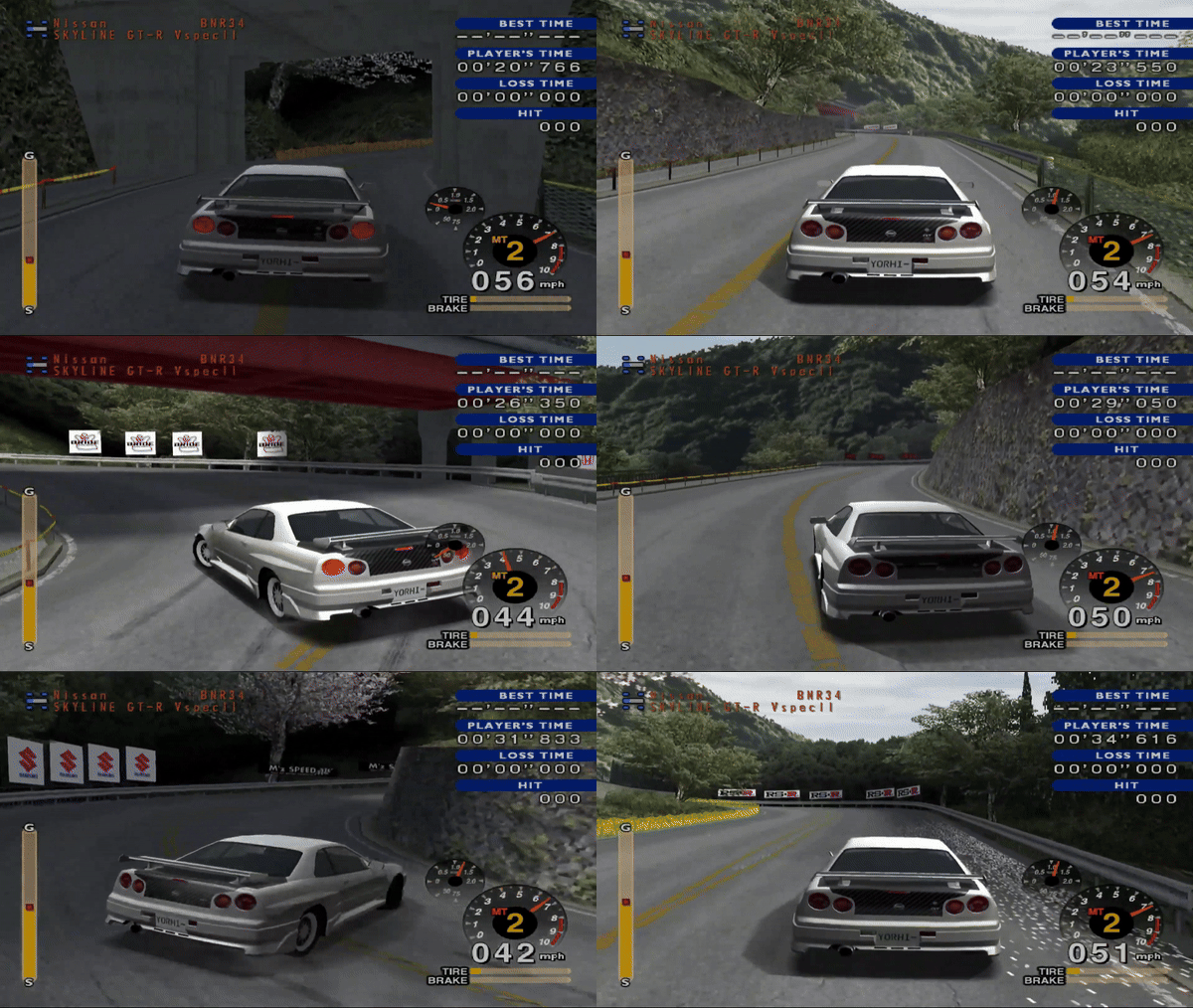
The game’s main career mode is called Conquest. Conquest features various types of battles, each with different win conditions.
1. Corner Artist (CA Battle)
These are drift-focused battles on mountain passes. Normally, drifting isn’t timed—but in TXRD2, you sometimes have a time limit, which forces you to balance speed, angle, and line for the perfect drift.
2. Time Attack (TA Battle)
Pure speed runs against the clock. Reach the finish line as fast as you can.
3. Spirit Point Battle
The main race mode. You either reach the finish line first, or your opponent runs out of SP (Spirit Points) and loses.
4. First and Last/Last and First
One car starts ahead, and the other starts behind. If the lead car gets 200m ahead, they win. If the chaser pulls 100m ahead, they win. Otherwise, whoever crosses the finish line first takes it.
5. Time Attack Collision (TAC Battle)
Like Time Attack, but now you have SP to protect. Hitting the walls loses SP. If your SP hits zero, you lose.
6. Corner Artist Target (CAT Battle)
You need to hit a specific score on every corner, or you fail. Usually saved for sponsor tests—and yes, it is as hard as it sounds.
During the day, you can take part in time attacks and drift challenges. These are legally sanctioned events, essential for raising money to further upgrade your ride.
By midnight, the roads become a haven for illegal racers, for whom fame is a reward bigger than any other. These night stages feature bosses known as slashers, who you need to defeat in order to get sponsors and progress further in the story
TXRD2 also features rally. The Record Tour mode takes you off the road and into the dirt, featuring mud-slicked rally tracks delivering true off-road action.

The tracks and courses in the game are all laser scanned versions of their real life counterparts, adapted to fit the game’s playstyle.
Sound
The sound design in TXRD2 is an integral part of the game, and the ambiance is surprisingly ahead of its time. Where you are on the track, time, and weather are all factors that decide what you hear. Moreover, everything from turbos to exhausts and engine sounds is identical to their real-life make.
The game also has an iconic OST, which, from what I’ve seen, has now outshined the game itself—becoming a staple background track across gaming YouTube videos.
Legacy
Despite everything it does right, TXRD2 has managed to fly under the mainstream radar. Limited to an outdated platform and emulators, the game has remained obscure for years. Yet its gameplay remains revered by those who know of it.


 MEDIAREKI